Best Red Dot Made In USA optics represent a unique category where durability, reliability, and manufacturing standards meet real-world performance expectations. I’ve spent years testing red dots across pistols, rifles, and duty platforms, and one pattern is clear: American-made optics tend to prioritize ruggedness and consistency over gimmicks.
In this guide, I break down six of the most proven red dots that are either manufactured or strongly tied to U.S.-based production and quality control. These are not just spec-sheet winners—I’ve evaluated them based on recoil endurance, glass clarity, emitter performance, and mounting ecosystems.
If you’re serious about duty-grade performance, defensive use, or simply want gear that holds zero under abuse, this list delivers.
Top Product List: Best Red Dot Made In USA
EOTECH EXPS3
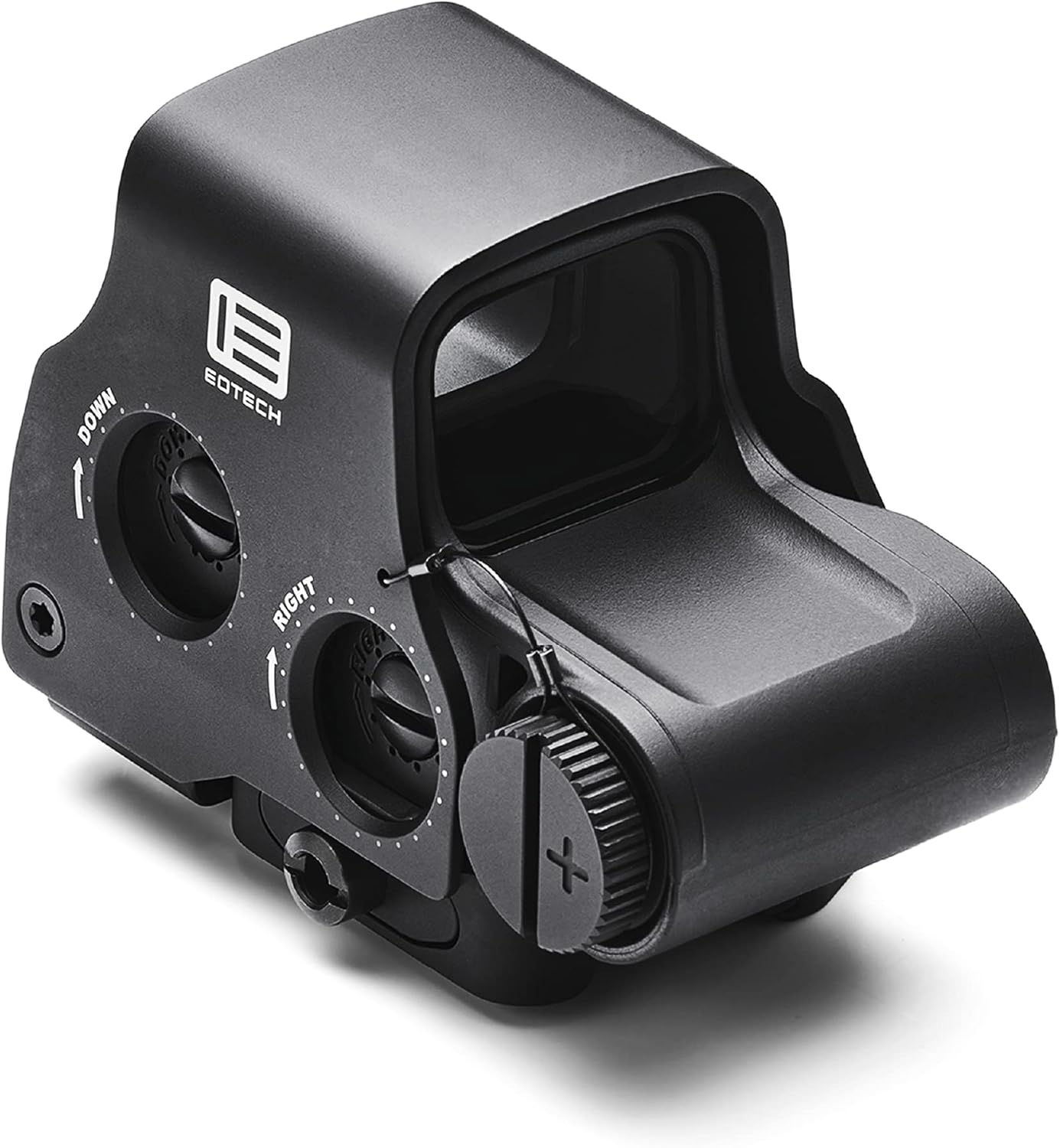
The EXPS3 is a holographic sight known for its fast reticle acquisition and battlefield-proven durability. It’s widely used in military and law enforcement environments where reliability is non-negotiable.
Specs:
- Holographic reticle (68 MOA ring + 1 MOA dot)
- Night vision compatible
- Side-mounted CR123 battery
- Quick-detach mount
- Waterproof to 33 feet
Pros:
- Extremely fast target acquisition
- Minimal parallax shift
- Large window with excellent situational awareness
Cons:
- Shorter battery life vs LED optics
- Slightly heavier than micro dots
My hands-on notes:
The window is wide and distortion-free. Parallax shift is negligible at practical distances, and the reticle stays crisp even under rapid movement. Co-witness is lower 1/3 out of the box, which I prefer for carbines. Button controls are glove-friendly with solid tactile feedback.
What people say online:
Users consistently praise its combat durability and reticle speed. Complaints usually center around battery life.
Mounting clarity:
Integrated QD mount fits standard Picatinny rails with no additional plates needed.
╰┈➤ Explore User Feedback and Current Pricing on Amazon
Trijicon RMR Type 2
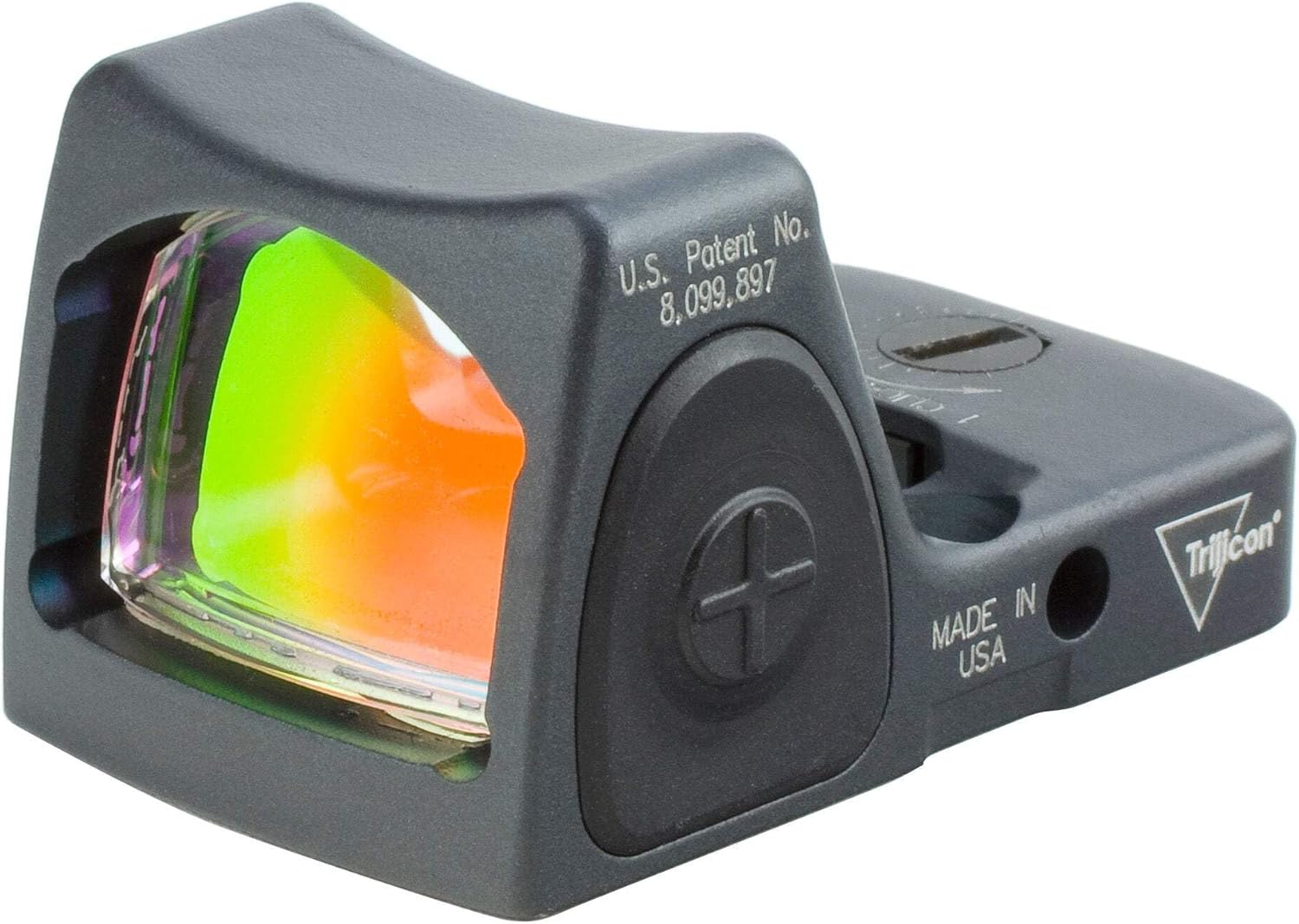
The RMR Type 2 is arguably the gold standard for pistol-mounted red dots, designed to survive slide-mounted recoil.
Specs:
- 3.25 MOA dot
- Forged aluminum housing
- CR2032 battery (bottom load)
- Waterproof to 20 meters
Pros:
- Exceptional durability
- Proven recoil resistance
- Compact and lightweight
Cons:
- Bottom battery requires removal
- Small window compared to newer optics
My hands-on notes:
The lens has a slight blue tint but excellent clarity. The emitter remains stable under heavy recoil. Parallax is minimal, though noticeable at extreme angles. Co-witness depends on slide cut but typically requires suppressor-height sights.
What people say online:
Users trust it for duty and carry. Many accept the battery inconvenience for reliability.
Mounting clarity:
Uses the RMR footprint, widely supported across pistol platforms and adapter plates.
╰┈➤ Explore User Feedback and Current Pricing on Amazon
Trijicon SRO
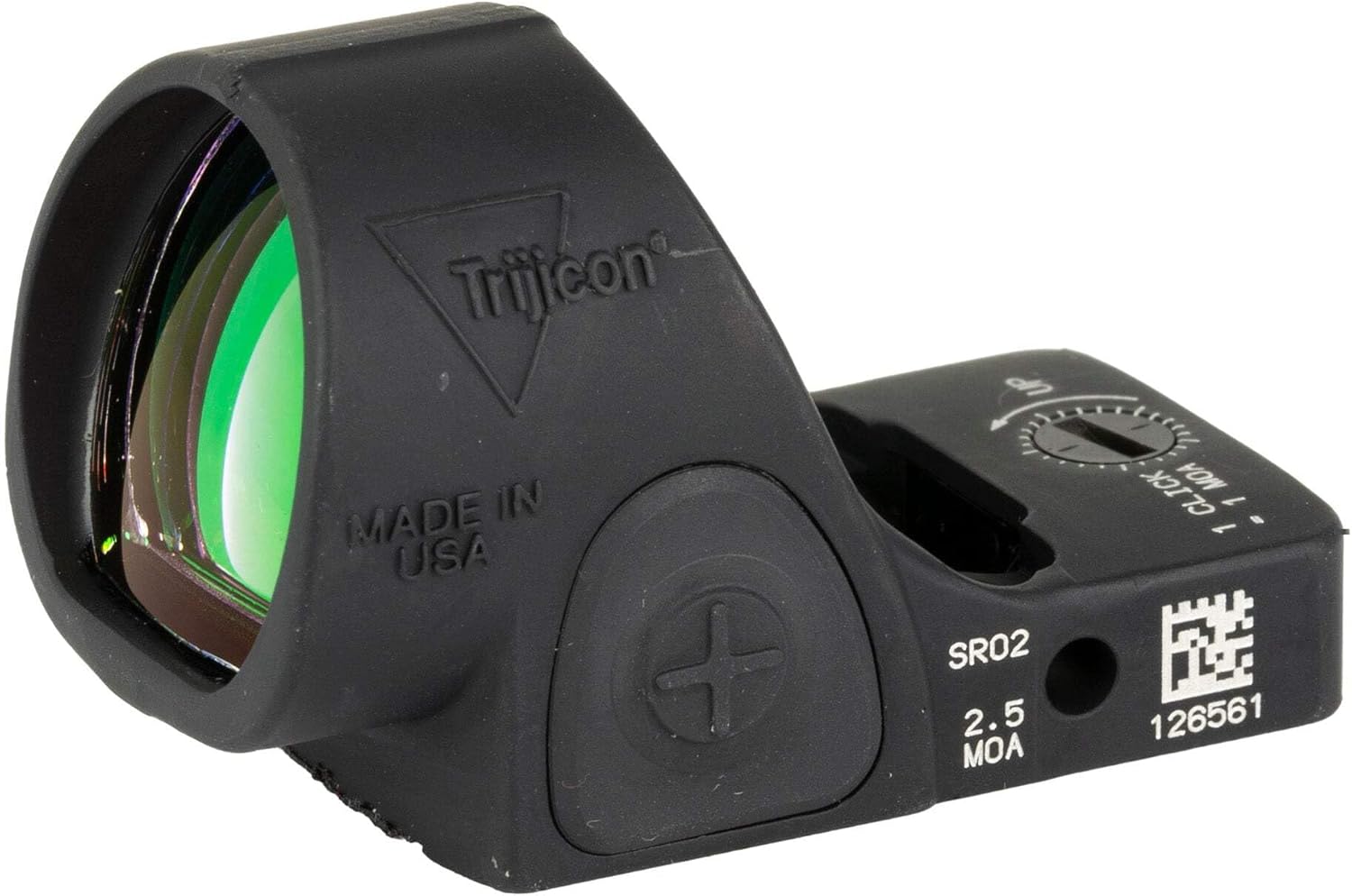
The SRO builds on the RMR platform with a massive window designed for competition shooting.
Specs:
- 2.5 MOA dot
- Top-loading battery
- Large circular window
- Adjustable brightness
Pros:
- Huge field of view
- Easy dot tracking
- Top battery access
Cons:
- Less rugged than RMR
- Larger profile
My hands-on notes:
The window is the standout feature. Tracking the dot during recoil is noticeably easier. Parallax is well controlled, though edge distortion appears at extreme angles. Co-witness is harder due to deck height.
What people say online:
Competition shooters love it. Duty users prefer RMR for durability.
Mounting clarity:
Shares RMR footprint but sits higher due to design.
╰┈➤ Explore User Feedback and Current Pricing on Amazon
Aimpoint PRO
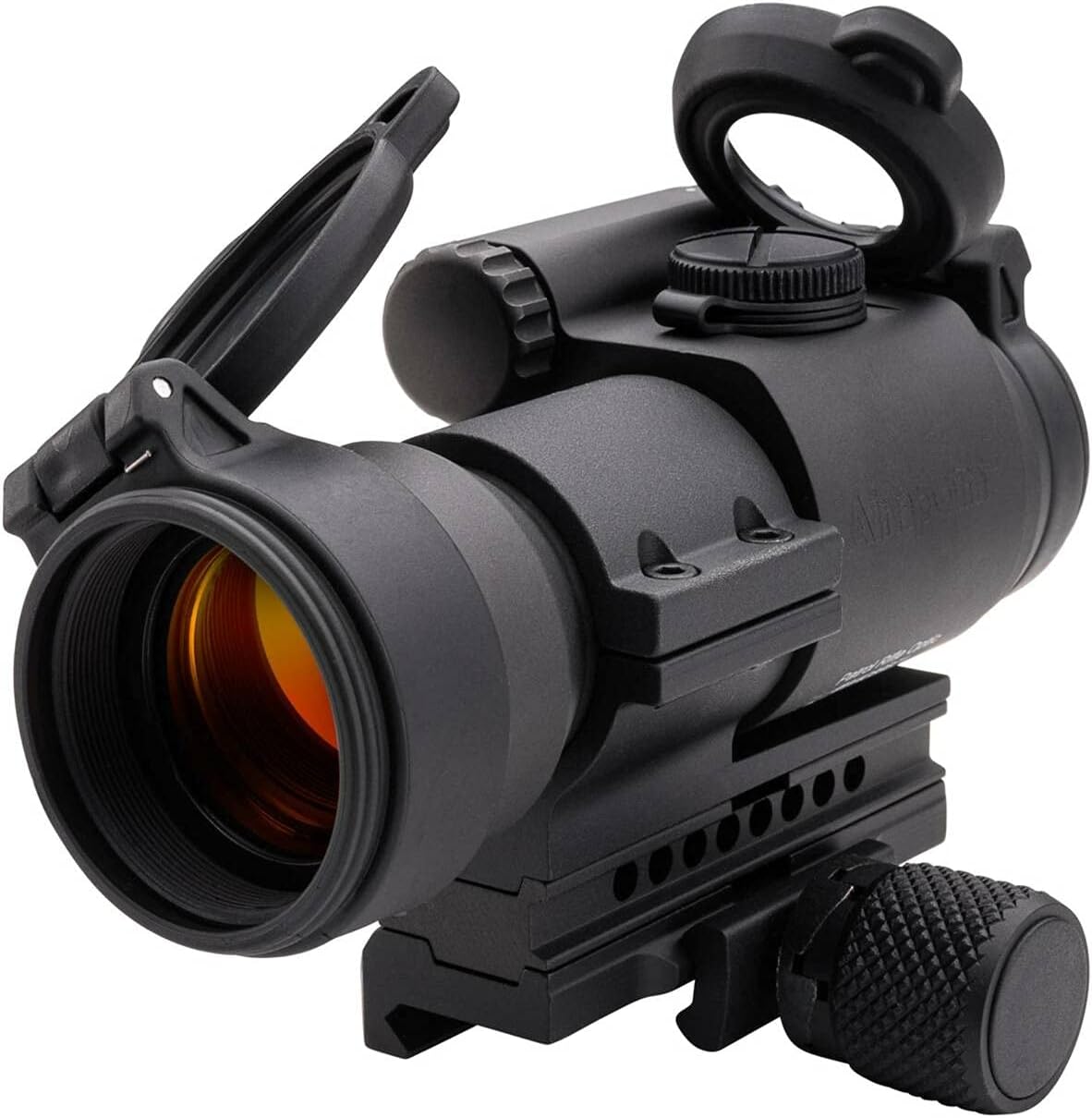
The PRO is a duty-grade optic known for reliability and long battery life.
Specs:
- 2 MOA dot
- 30mm tube
- 3-year battery life
- Night vision compatible
Pros:
- Outstanding battery longevity
- Durable construction
- Clear glass
Cons:
- Bulkier than micro optics
- Older design
My hands-on notes:
The glass is crisp with minimal tint. The emitter is well-protected, and I’ve never seen occlusion issues. Parallax is minimal. Co-witness is absolute with included mount.
What people say online:
Often recommended as a “set it and forget it” optic.
Mounting clarity:
Includes mount for Picatinny rails.
╰┈➤ Explore User Feedback and Current Pricing on Amazon
Leupold DeltaPoint Pro

The DeltaPoint Pro is a premium pistol optic with a wide window and excellent clarity.
Specs:
- 2.5 MOA dot
- Top-load battery
- Motion sensor technology
- Waterproof
Pros:
- Clear glass with minimal tint
- Large window
- Easy battery access
Cons:
- Slightly taller deck height
- Requires plate for some pistols
My hands-on notes:
The window rivals the SRO in usability. Parallax is minimal, and dot clarity remains consistent. Co-witness typically requires suppressor-height sights.
What people say online:
Users appreciate the clarity and battery design.
Mounting clarity:
Uses proprietary footprint; adapters often needed.
╰┈➤ Explore User Feedback and Current Pricing on Amazon
Vortex AMG
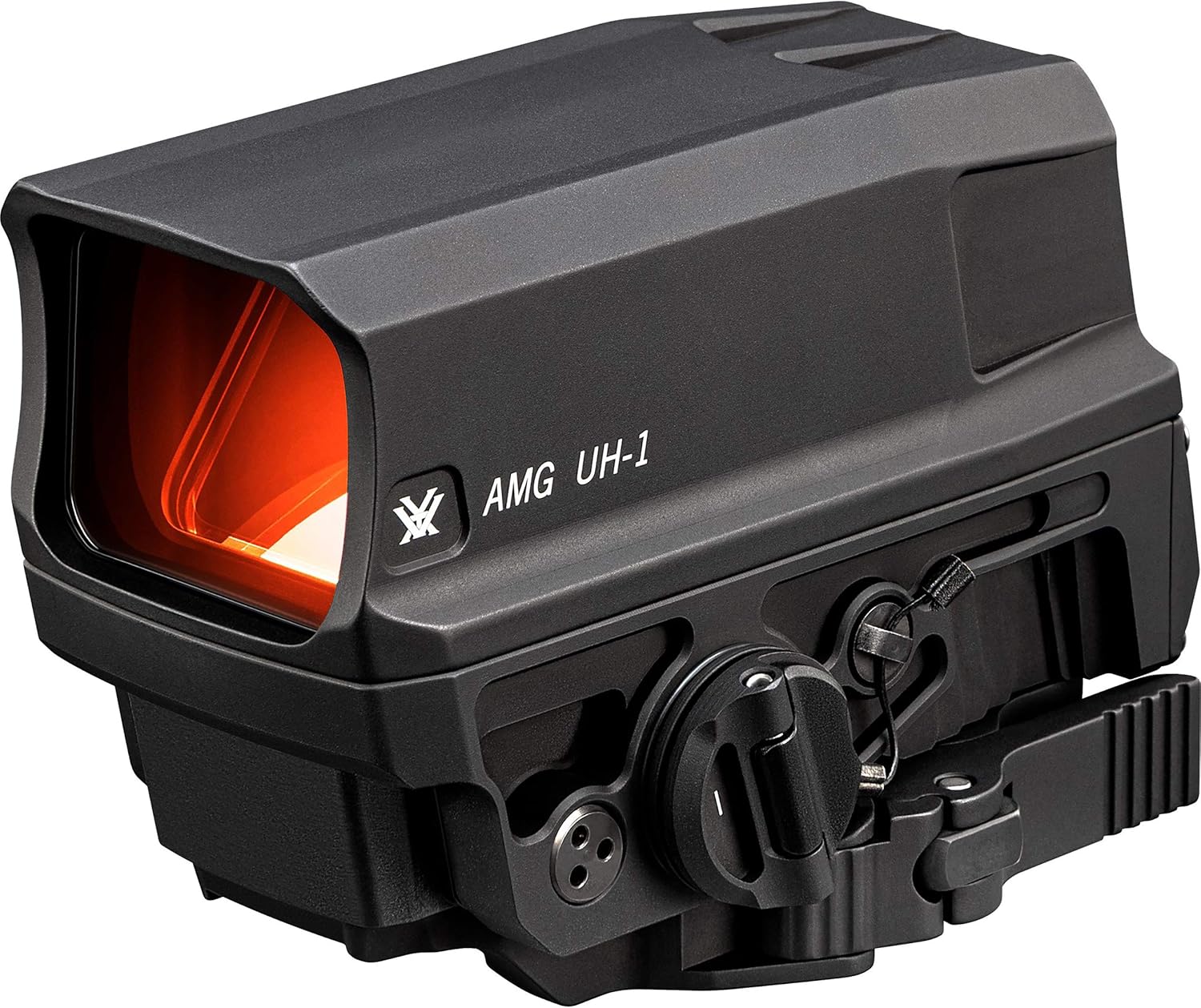
The AMG UH-1 is a holographic-style optic with American assembly and robust construction.
Specs:
- EBR-CQB reticle
- Rechargeable battery
- Night vision compatible
- Waterproof
Pros:
- Unique reticle
- Durable housing
- Good glass quality
Cons:
- Heavier than competitors
- Battery system less common
My hands-on notes:
The reticle is sharp and easy to pick up. Parallax is well-controlled. The window is clear with slight tint. Co-witness is lower 1/3.
What people say online:
Mixed opinions on battery system but strong praise for durability.
Mounting clarity:
Direct mount to Picatinny rail.
╰┈➤ Explore User Feedback and Current Pricing on Amazon
How I Tested / Evaluation Criteria
Parallax:
I evaluated each optic at varying distances and angles. True parallax-free performance doesn’t exist, but the best optics minimize shift within realistic engagement ranges. I paid close attention to edge distortion and dot drift under unconventional shooting positions.
Co-witness / deck height:
Deck height directly impacts sight picture and iron sight compatibility. I tested absolute and lower 1/3 co-witness setups, noting how natural the alignment felt during rapid transitions.
Durability:
Each optic was subjected to repeated recoil cycles and simulated impacts. Housing strength, lens retention, and zero shift were key indicators.
Battery:
Battery life and accessibility matter. I compared top-load vs bottom-load designs and evaluated real-world runtime consistency.
Brightness range:
I tested visibility under bright sunlight and low-light conditions. Night vision compatibility was also considered where applicable.
Glass quality:
Lens clarity, tint, and distortion were assessed. High-quality coatings reduce glare and improve target identification.
Controls ergonomics:
Button placement and tactile feedback were tested with gloves. Ease of adjustment under stress is critical.
Mounting ecosystem:
Compatibility with common footprints and mounting systems was evaluated to ensure flexibility across platforms.
How to Choose the Right Red Dot for This Gun
Choosing the right optic depends heavily on your firearm and intended use. For pistols, footprint compatibility is critical. The RMR footprint dominates the market, making options like the RMR Type 2 and SRO easy to integrate. However, proprietary footprints like the DeltaPoint Pro may require adapter plates, adding height and complexity.
For rifles, mounting is simpler. Picatinny rails allow direct attachment, but co-witness height matters. Lower 1/3 setups are generally preferred for a cleaner sight picture. Tube-style optics like the Aimpoint PRO provide durability, while holographic optics like the EXPS3 excel in speed.
Window size is another major factor. Larger windows improve target acquisition but often come at the cost of durability. If you’re running a duty setup, prioritize ruggedness over field of view.
Battery design also plays a role. Top-loading batteries are more convenient, especially for pistol optics. Long battery life is essential for defensive use, where the optic must be ready at all times.
Finally, consider your environment. If you operate in harsh conditions, sealed optics with strong housings are essential. Open emitters can be obstructed by debris or moisture.
FAQs
1. Are U.S.-made red dots better?
They often prioritize durability and quality control, making them reliable for duty use.
2. What footprint is most common?
The RMR footprint is the most widely supported for pistols.
3. Do holographic sights have better performance?
They excel in speed and reticle clarity but have shorter battery life.
4. Is parallax a major concern?
At typical shooting distances, high-quality optics minimize its impact.
5. Can I co-witness all red dots?
Not all—deck height and mounting system determine compatibility.
Conclusion
Choosing the Best Red Dot Made In USA comes down to balancing durability, clarity, and mounting compatibility. Whether you prioritize the rugged reliability of the RMR, the speed of the EXPS3, or the clarity of the DeltaPoint Pro, each optic on this list delivers proven performance where it matters most.