The Best Red Dot for Skeet Shooting isn’t just about speed—it’s about maintaining a clean sight picture while tracking fast, unpredictable clay targets across the sky. After years of testing optics on shotguns under real skeet conditions, I’ve learned that not all red dots translate well from rifles or pistols to this sport.
Skeet shooting demands a unique combination of wide field of view, minimal parallax shift, ultra-fast target acquisition, and durability under repetitive recoil. A poor optic can actually slow you down or obscure your lead. A great one becomes nearly invisible—letting you focus purely on the clay.
In this guide, I break down six optics that genuinely perform on shotguns, with detailed hands-on insights, mounting considerations, and real-world feedback.
Top Product List: Best Red Dot for Skeet Shooting
Burris FastFire 3
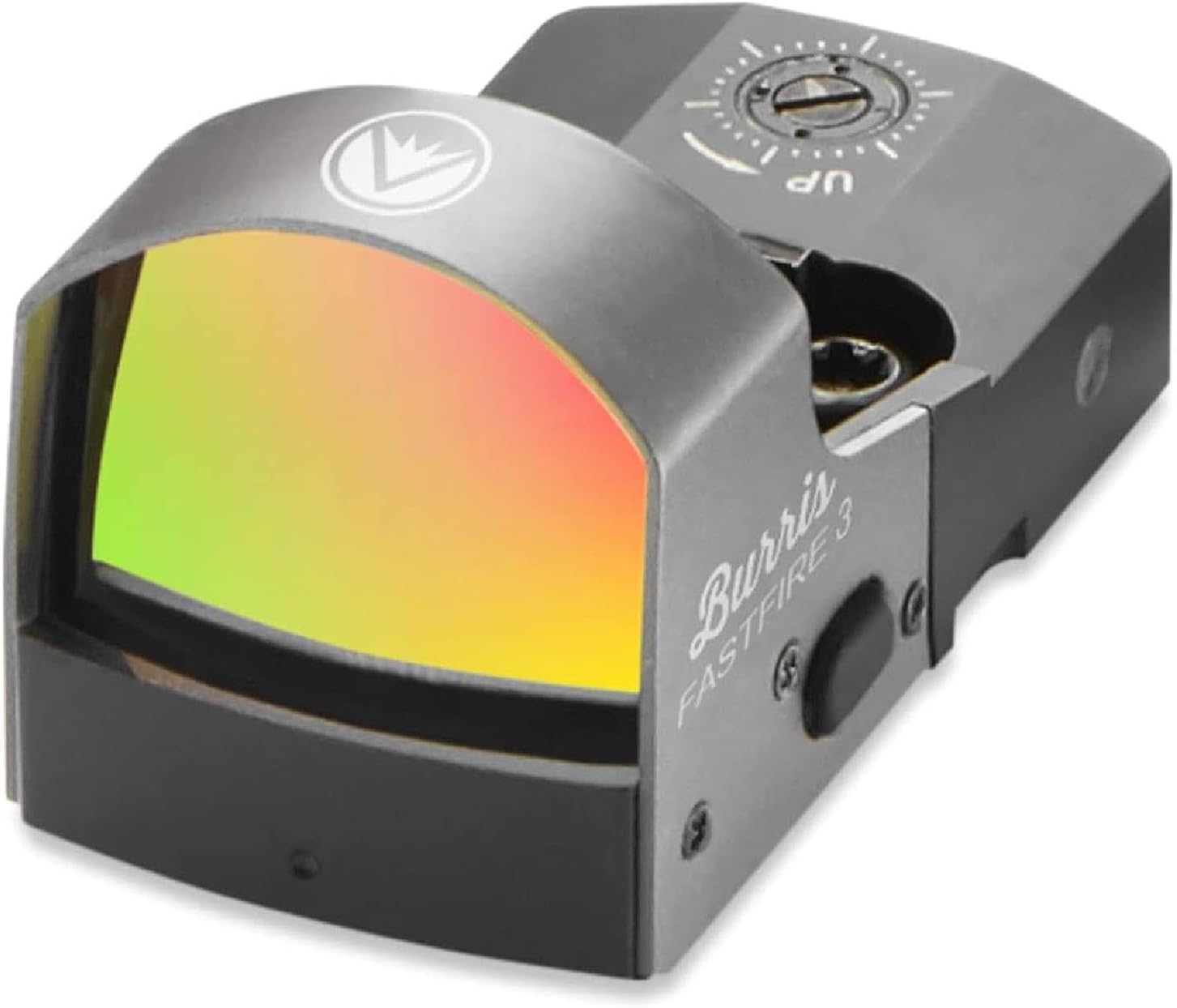
A lightweight, minimalist reflex sight that excels on shotguns due to its low profile and fast acquisition.
Specs:
- 3 MOA dot
- Top-load CR1632 battery
- 25,000-hour runtime
- Automatic brightness
Pros:
- Extremely lightweight
- Low deck height aids natural mount
- Wide, unobstructed window
Cons:
- Open emitter vulnerable to debris
- Auto brightness can struggle in harsh transitions
My Hands-On Notes:
The FastFire 3 feels almost invisible when mounted properly. Parallax is minimal at skeet distances, and I noticed very little shift even when my cheek weld wasn’t perfect. Co-witness isn’t relevant here, but the low deck height keeps your mount natural—critical for instinctive shooting.
What People Say Online:
Shooters consistently praise its speed and simplicity, though some mention durability concerns in harsh environments.
Mounting:
Typically requires a shotgun rib mount or adapter plate.
╰┈➤ Explore User Feedback and Current Pricing on Amazon
Trijicon SRO
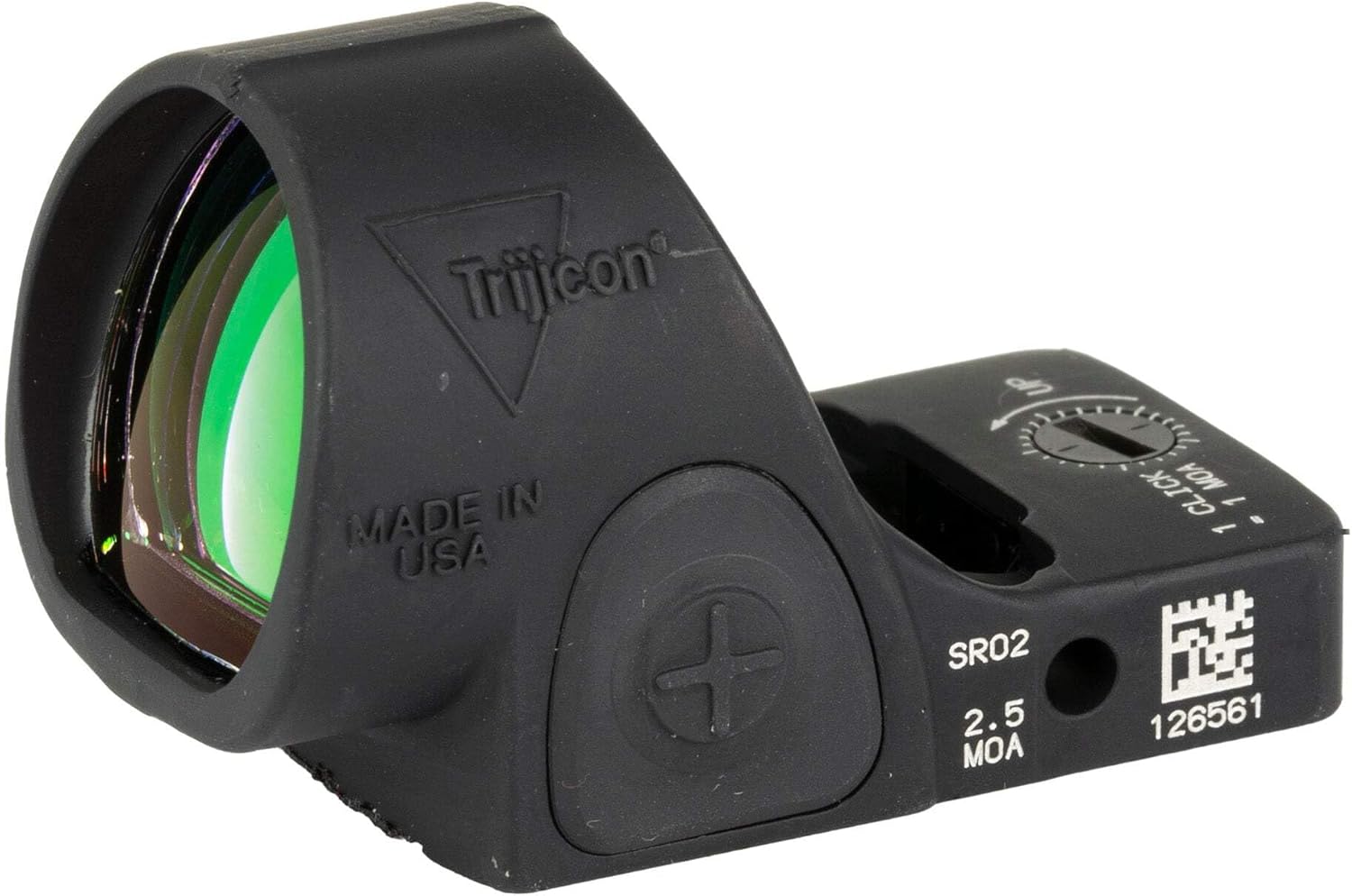
Designed for competition, the SRO offers one of the largest windows available in a compact optic.
Specs:
- 2.5 or 5 MOA dot
- Top-loading battery
- Adjustable brightness
- RMR footprint
Pros:
- Massive field of view
- Crisp dot with minimal bloom
- Excellent glass clarity
Cons:
- Expensive
- Slightly bulky for some setups
My Hands-On Notes:
The SRO’s window is a game changer for skeet. Tracking crossing targets feels effortless. Parallax is well controlled, and the dot stays consistent even off-axis. Button tactility is excellent—even with gloves.
What People Say Online:
Widely regarded as one of the best competition optics, especially for fast-moving targets.
Mounting:
Uses RMR footprint—requires adapter for shotgun rib.
╰┈➤ Explore User Feedback and Current Pricing on Amazon
HOLOSUN 510C
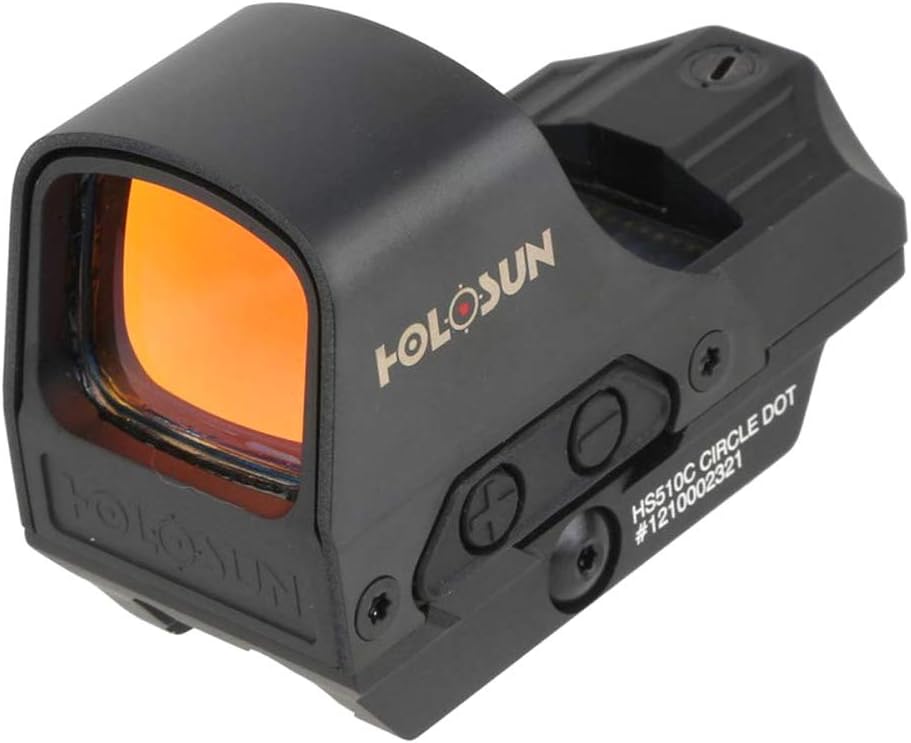
An open reflex sight with a large viewing window and versatile reticle system.
Specs:
- 2 MOA dot + 65 MOA circle
- Solar backup
- Side battery tray
- Aluminum housing
Pros:
- Huge window
- Multi-reticle system
- Easy battery access
Cons:
- Bulkier than micro optics
- Open emitter
My Hands-On Notes:
The circle-dot reticle actually helps with lead estimation in skeet. Parallax shift is minimal, and the large window reduces tunnel vision. Slight blue tint is noticeable but not distracting.
What People Say Online:
Highly popular for its value and features, especially among practical shooters.
Mounting:
Picatinny mount—requires rail adapter on shotgun.
╰┈➤ Explore User Feedback and Current Pricing on Amazon
Aimpoint Micro S-1
Purpose-built for shotguns, this optic mounts directly to the rib without altering balance.
Specs:
- 6 MOA dot
- 5-year battery life
- Dedicated shotgun mount
- Fully enclosed emitter
Pros:
- Designed specifically for skeet
- No rail required
- Exceptional durability
Cons:
- Expensive
- Smaller window than open reflex sights
My Hands-On Notes:
This is the most “natural” optic I’ve used on a shotgun. Zero parallax concerns at skeet ranges. The enclosed emitter prevents occlusion from dust or moisture.
What People Say Online:
Praised for its reliability and purpose-built design, though price is a common complaint.
Mounting:
Direct rib mount—no adapter needed.
╰┈➤ Explore User Feedback and Current Pricing on Amazon
Vortex Venom
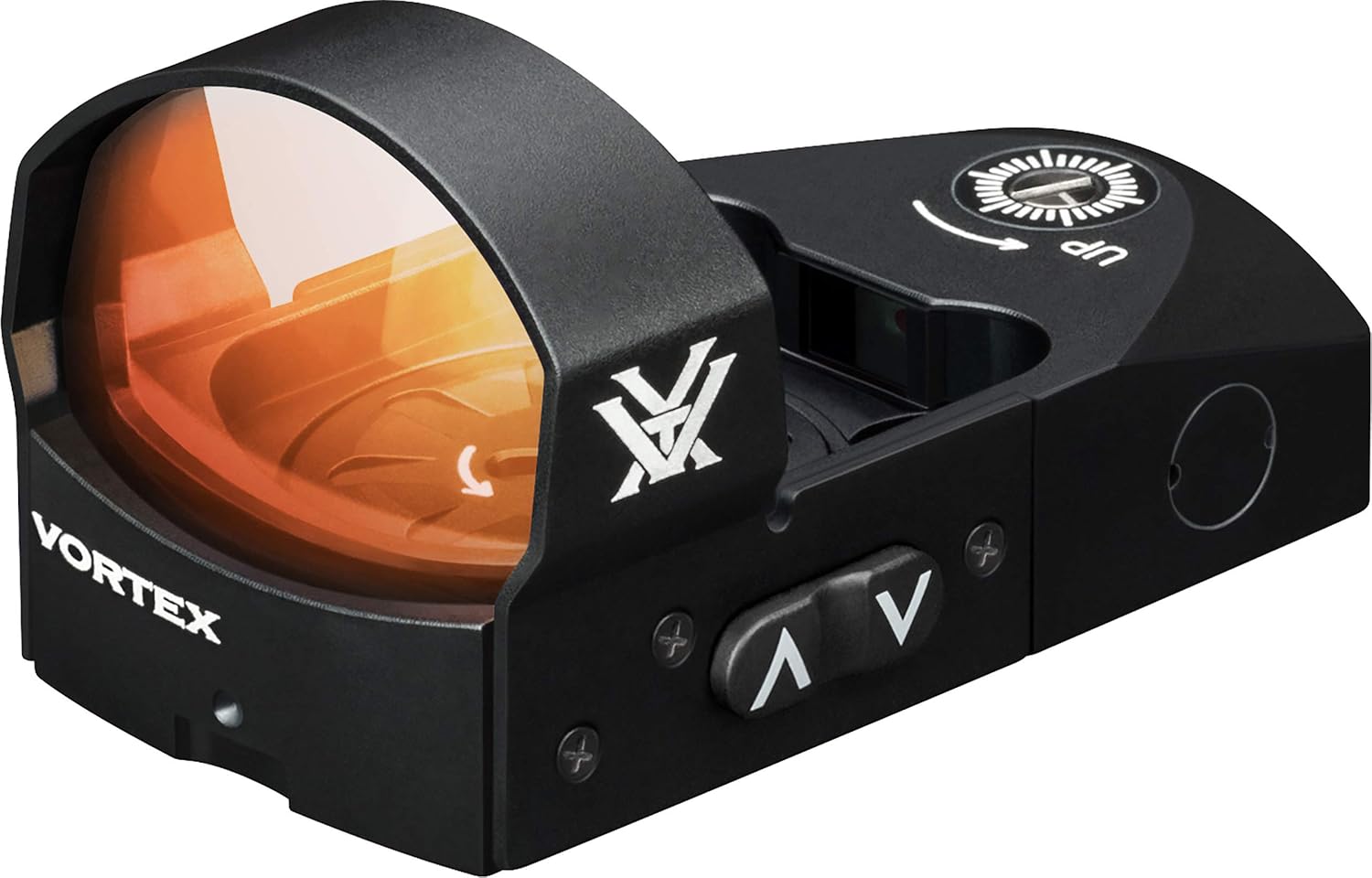
A budget-friendly reflex sight with solid performance for casual skeet shooters.
Specs:
- 3 MOA dot
- Top-load battery
- Auto and manual brightness
- Aluminum housing
Pros:
- Affordable
- Good clarity
- Easy controls
Cons:
- Auto mode inconsistent
- Open emitter design
My Hands-On Notes:
The Venom performs surprisingly well for the price. Slight distortion at the edges, but center clarity is good. Buttons are a bit mushy with gloves.
What People Say Online:
Popular entry-level choice with good reliability.
Mounting:
Requires mounting plate or rib adapter.
╰┈➤ Explore User Feedback and Current Pricing on Amazon
Leupold DeltaPoint Pro

A premium optic with excellent glass and a wide viewing window.
Specs:
- 2.5 MOA dot
- Motion sensor activation
- Top battery access
- Waterproof design
Pros:
- Outstanding clarity
- Durable build
- Large window
Cons:
- Expensive
- Slightly taller deck height
My Hands-On Notes:
Glass quality is among the best. Minimal tint, excellent light transmission. Parallax is negligible. Slightly higher deck height requires adjustment in mount.
What People Say Online:
Highly respected for durability and clarity.
Mounting:
Requires adapter plate for shotgun use.
╰┈➤ Explore User Feedback and Current Pricing on Amazon
How I Tested / Evaluation Criteria
Parallax:
I evaluated each optic by intentionally shifting head position during target tracking. The best performers showed minimal point-of-impact deviation even at extreme angles.
Co-witness / Deck Height:
On shotguns, natural mount matters more than co-witness. Lower deck height optics allowed faster, more instinctive alignment.
Durability:
Repeated recoil cycles from 12-gauge loads revealed weaknesses quickly. Only optics with solid housings and secure battery compartments passed.
Battery:
Top-load or side-load batteries were heavily favored. Removing optics to change batteries is a major drawback.
Brightness Range:
Skeet involves changing light conditions. Optics needed to handle bright sunlight without washout.
Glass Quality:
I looked for minimal tint, low distortion, and clear edge-to-edge visibility.
Controls Ergonomics:
Buttons had to be usable with gloves and under pressure.
Mounting Ecosystem:
Compatibility with rib mounts or adapters was critical for real-world usability.
How to Choose the Right Red Dot for This Gun
Choosing a red dot for skeet shooting is fundamentally different from selecting one for a rifle or pistol. The biggest mistake I see is prioritizing precision over speed. Skeet is about fluid motion, not static aiming.
First, prioritize window size. A larger window allows you to track targets without losing them at the edges. This is why optics like the SRO and 510C perform so well.
Second, consider deck height. If the optic sits too high, it disrupts your natural mount and forces you to adjust your cheek weld. This slows down your shot and introduces inconsistency.
Third, think about emitter design. Open emitters offer better visibility but are vulnerable to debris. Enclosed emitters are more durable but often have smaller windows.
Battery access is another critical factor. In a sport where consistency matters, you don’t want to re-zero after every battery change.
Finally, mounting matters more than most people realize. A direct rib mount like the Aimpoint S-1 preserves the shotgun’s balance and handling characteristics, while rail-mounted optics can feel bulky.
FAQs
1. Do I really need a red dot for skeet shooting?
Not necessarily, but it can improve consistency and help newer shooters track targets more effectively.
2. What dot size is best?
Larger dots (5–6 MOA) are generally better for fast target acquisition.
3. Are open emitter sights reliable?
Yes, but they require more maintenance in dusty or wet conditions.
4. Will a red dot slow me down?
Only if it’s poorly mounted or has a small window.
5. Can I use a rifle red dot on a shotgun?
Yes, but weight and mounting height must be considered.
Conclusion
After extensive testing, I can confidently say that the Best Red Dot for Skeet Shooting is the one that disappears when you mount your shotgun—leaving nothing but the target in your field of view. Whether you prioritize window size, durability, or mounting simplicity, the six optics above represent the best balance of performance and practicality.
Sources to verify: manufacturer specs, optics review sites, user forums, and mounting compatibility guides.