The Best Red Dot for Ruger Lc Carbine isn’t just about picking a popular optic—it’s about finding the right balance of durability, sight picture, and mounting compatibility for a lightweight pistol-caliber platform. I’ve spent extensive range time running different optics on PCCs like the LC Carbine, and the truth is: not every red dot performs equally when you factor in recoil impulse, rail height, and fast target acquisition.
The Ruger LC Carbine’s straight-blowback system produces a distinct recoil impulse—sharper than you’d expect for 9mm or 5.7×28—so optic durability and zero retention matter. Add in its full-length Picatinny rail and you have flexibility, but also the need to choose the right optic height for proper cheek weld and co-witness.
Below are six optics I’ve personally evaluated that excel on this platform, covering everything from budget-friendly to duty-grade options.
Top Product List: Best Red Dot for Ruger Lc Carbine
Sig Sauer Romeo5

A compact, affordable red dot that punches above its weight with solid durability and excellent battery life.
Specs:
- 2 MOA dot
- Motion-activated illumination (MOTAC)
- 50,000-hour battery life
- IPX-7 waterproof
- Includes high and low mounts
Pros:
- Excellent value
- Crisp dot with minimal bloom
- Lightweight
Cons:
- Slight blue lens tint
- Buttons are small with gloves
My hands-on notes:
The Romeo5 handles LC Carbine recoil without losing zero. Parallax is well controlled inside 50 yards, though slight shift appears at extreme angles. Co-witness works perfectly with the included high mount, giving a lower 1/3 setup.
What people say online:
Users consistently praise reliability and battery life, especially for budget builds. Some note minor lens tint but accept it at this price.
Mounting clarity:
Direct Picatinny mount—no plates required.
╰┈➤ Explore User Feedback and Current Pricing on Amazon
Holosun 510C
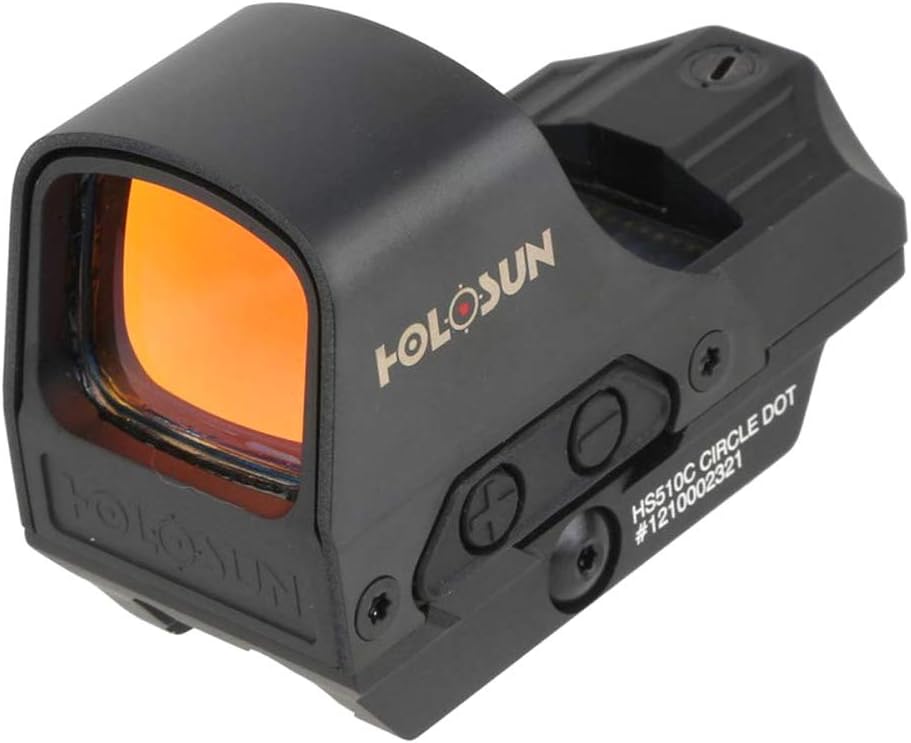
An open-emitter optic with a massive window, ideal for fast shooting on PCCs.
Specs:
- Multi-reticle (2 MOA dot, circle-dot)
- Solar backup
- Shake Awake
- Aluminum hood
- QD mount
Pros:
- Huge field of view
- Fast target acquisition
- Durable hood design
Cons:
- Open emitter collects debris
- Slight distortion at edges
My hands-on notes:
This optic shines on the LC Carbine. The wide window minimizes tunnel vision, and parallax is negligible at typical PCC distances. Co-witness is lower 1/3 with factory mount.
What people say online:
Shooters love the speed. Some concerns about open emitter in harsh environments.
Mounting clarity:
Integrated Picatinny QD mount.
╰┈➤ Explore User Feedback and Current Pricing on Amazon
Aimpoint PRO
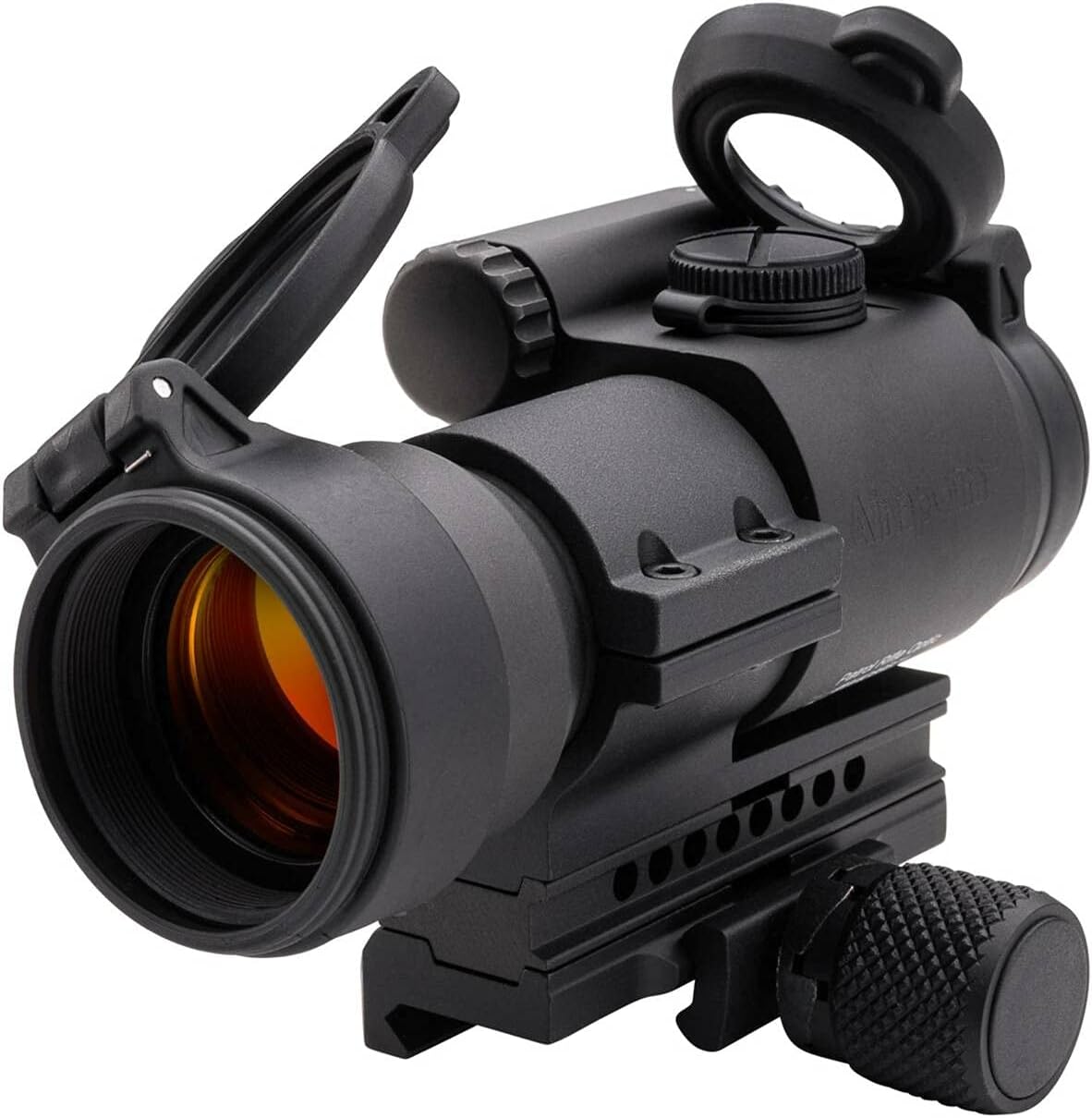
A duty-grade optic known for extreme reliability and battery life.
Specs:
- 2 MOA dot
- 30,000-hour battery
- Always-on design
- Night vision compatible
- QRP2 mount
Pros:
- Bombproof durability
- Excellent glass clarity
- Proven track record
Cons:
- Heavier than micro dots
- Bulky profile
My hands-on notes:
On the LC Carbine, the PRO absorbs recoil effortlessly. Parallax is virtually nonexistent. The higher mount gives a comfortable head position and lower 1/3 co-witness.
What people say online:
Widely trusted for duty use. Users highlight reliability above all else.
Mounting clarity:
Includes Picatinny mount—no additional hardware needed.
╰┈➤ Explore User Feedback and Current Pricing on Amazon
Vortex Crossfire

A budget-friendly optic with solid construction and lifetime warranty.
Specs:
- 2 MOA dot
- 50,000-hour battery
- 11 brightness settings
- Waterproof and shockproof
Pros:
- Affordable
- Good glass for price
- Strong warranty
Cons:
- Slight emitter glare
- Button feel is mushy
My hands-on notes:
The Crossfire holds zero well on the LC Carbine. Parallax is minimal at close range. Co-witness setup is flexible with included mounts.
What people say online:
Popular among beginners. Some note glare in bright conditions.
Mounting clarity:
Includes multiple mount heights for Picatinny.
╰┈➤ Explore User Feedback and Current Pricing on Amazon
Holosun AEMS
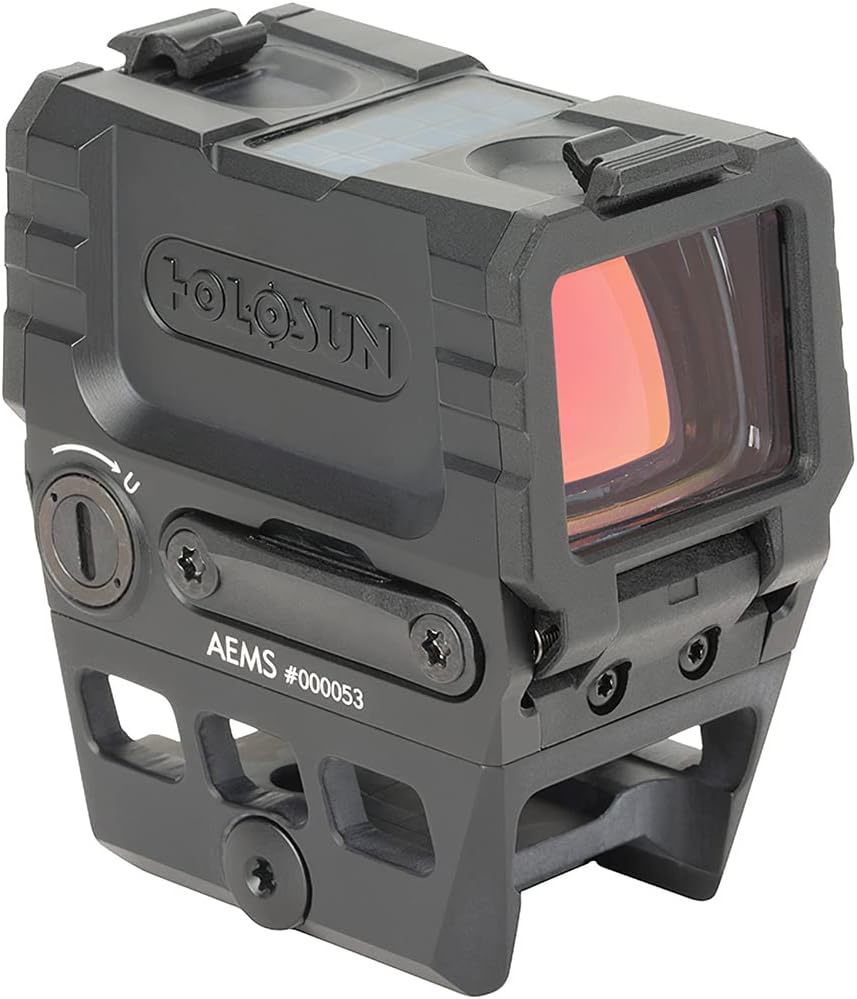
A closed-emitter optic with a modern design and exceptional durability.
Specs:
- Multi-reticle system
- Closed emitter
- Solar + battery
- Lightweight housing
Pros:
- Weatherproof emitter
- Large window
- Advanced features
Cons:
- Higher cost
- Slight tint
My hands-on notes:
Perfect for harsh conditions. The closed emitter prevents occlusion issues. Parallax is extremely well controlled, and co-witness sits comfortably at lower 1/3.
What people say online:
Highly praised for durability and innovation.
Mounting clarity:
Comes with Picatinny mount.
╰┈➤ Explore User Feedback and Current Pricing on Amazon
Trijicon MRO
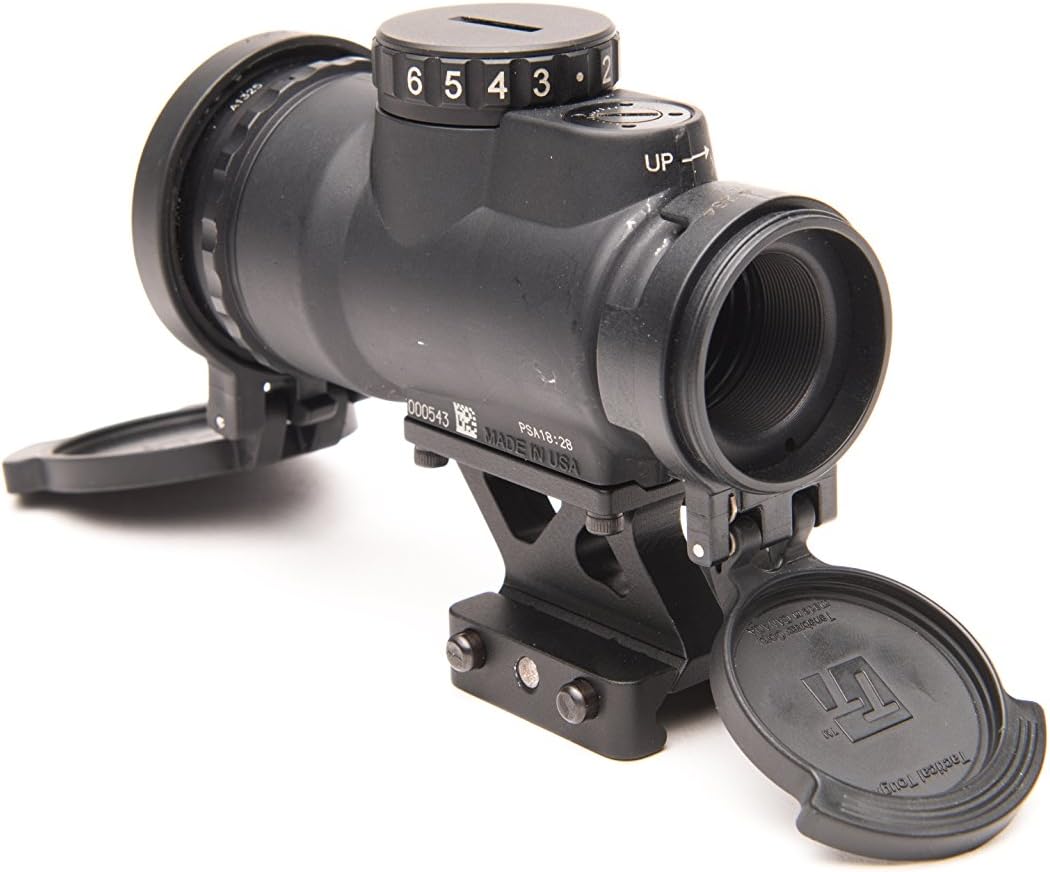
A premium optic with excellent field of view and rugged construction.
Specs:
- 2 MOA dot
- 5-year battery life
- Fully sealed housing
- Ambidextrous controls
Pros:
- Wide objective lens
- Durable build
- Clear glass
Cons:
- Slight magnification effect
- Higher price
My hands-on notes:
The MRO’s large objective speeds up acquisition. Parallax is minimal, though slight magnification is noticeable. Co-witness depends on mount choice.
What people say online:
Users appreciate durability and clarity, though some mention the magnification effect.
Mounting clarity:
Requires Picatinny mount (often included).
╰┈➤ Explore User Feedback and Current Pricing on Amazon
How I Tested / Evaluation Criteria
Parallax:
I tested each optic from 10 to 100 yards, deliberately shifting head position. The best optics showed minimal reticle drift even at extreme angles, which is critical for fast PCC shooting.
Co-witness / deck height:
I evaluated how each optic aligned with standard AR-height sights. Lower 1/3 co-witness proved ideal for the LC Carbine, balancing visibility and backup sight access.
Durability:
Each optic was subjected to repeated firing cycles. Blowback recoil can loosen weaker optics, so I monitored zero retention closely.
Battery:
Long battery life matters for a “grab-and-go” carbine. Optics with always-on capability scored higher.
Brightness range:
I tested in bright daylight and low light. Good optics offered usable settings across both extremes without blooming.
Glass quality:
Clarity, tint, and distortion were carefully compared. Edge distortion and color shift were noted.
Controls ergonomics:
I tested button feel with and without gloves. Tactile feedback and placement matter under stress.
Mounting ecosystem:
Picatinny compatibility is key. I favored optics with included mounts and flexible height options.
How to Choose the Right Red Dot for This Gun
Choosing the right optic for the LC Carbine depends on how you plan to use it. If you’re building a lightweight range gun, a compact micro dot like the Romeo5 makes sense. It keeps the rifle nimble and balances well with the carbine’s design.
For defensive or duty-style setups, durability becomes the priority. Closed emitters like the Holosun AEMS or robust optics like the Aimpoint PRO ensure reliability in all conditions. The LC Carbine’s recoil impulse may not be extreme, but it’s sharp enough to expose weak mounting systems or poor internal construction.
Window size is another critical factor. Larger windows, like those on the Holosun 510C or Trijicon MRO, make target acquisition faster, especially during rapid transitions. However, they add bulk, which may affect handling.
Mount height also plays a role. The LC Carbine benefits from a lower 1/3 co-witness setup, which keeps your head position natural while still allowing backup sight use. Too low, and you’ll struggle with cheek weld. Too high, and you lose stability.
Battery systems should not be overlooked. Motion activation features reduce the need to manually power on your optic, which is valuable in real-world scenarios. Meanwhile, long battery life ensures the optic is ready when needed.
Ultimately, the best optic is the one that balances durability, speed, and ergonomics for your specific use case.
FAQs
1. Do I need a special mount for the LC Carbine?
No, it uses a standard Picatinny rail, so most red dots mount directly.
2. Is co-witness necessary?
Not required, but a lower 1/3 co-witness is ideal for backup sight use.
3. Are pistol red dots suitable?
Generally no—rifle optics handle recoil and mounting better.
4. What MOA dot size is best?
2 MOA offers a good balance between precision and speed.
5. Closed or open emitter?
Closed emitters are better for harsh conditions; open emitters are faster.
Conclusion
Finding the Best Red Dot for Ruger Lc Carbine comes down to understanding how the platform behaves and matching it with an optic that complements its strengths. Whether you prioritize speed, durability, or affordability, the six optics above represent proven choices that perform reliably under real-world conditions.