The Best Red Dot for M&p Shield Plus 9mm isn’t just about brand reputation—it’s about footprint compatibility, carry comfort, and real-world durability on a slim micro-compact pistol.
I’ve spent significant time mounting, shooting, and evaluating optics specifically on slimline carry guns like the Shield Plus. This platform demands more from a red dot than full-size pistols: tighter tolerances, smaller windows, and harsher perceived recoil due to the lighter slide mass.
In this guide, I’ll break down six optics that actually work on the Shield Plus—covering real shooting impressions, mounting considerations, and the tradeoffs you need to understand before buying.
Top Product List: Best Red Dot for M&p Shield Plus 9mm
HOLOSUN 407K
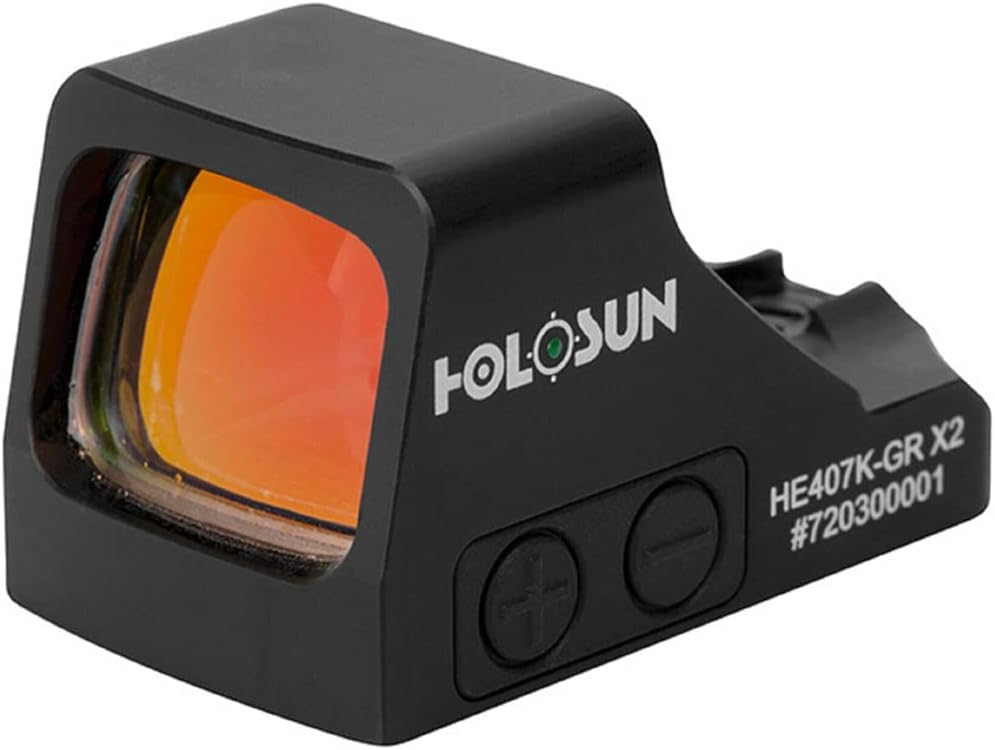
A minimalist micro red dot with a 6 MOA dot that prioritizes speed over precision.
Specs:
- 6 MOA dot
- RMSc footprint
- Side battery tray (CR1632)
- 50,000-hour battery life
- Aluminum housing
Pros:
- Excellent battery access design
- Large dot is fast for defensive shooting
- Minimal lens distortion
- Strong emitter brightness outdoors
Cons:
- Noticeable blue lens tint
- No multi-reticle system
- Buttons are small with gloves
My hands-on notes:
On the Shield Plus, the 407K sits low enough for a usable lower 1/3 co-witness with factory-height sights. Parallax shift is minimal inside 15 yards, though at extreme angles you’ll see slight deviation—as expected in this class. The emitter is partially recessed, reducing occlusion from lint or debris during concealed carry.
The tactile buttons are firm but shallow. With gloves, I had to deliberately press rather than “tap.” The recoil impulse of the Shield Plus didn’t affect zero retention, even after extended +P testing.
What people say online:
Users consistently praise its reliability and battery life. Reddit discussions often highlight it as the “set-and-forget” optic for micro-compacts.
Mounting clarity:
Direct RMSc footprint—fits Shield Plus optics-ready models without adapter plates.
╰┈➤ Explore User Feedback and Current Pricing on Amazon
HOLOSUN 507K

A feature-rich upgrade with multi-reticle versatility for shooters who want flexibility.
Specs:
- 2 MOA dot + 32 MOA circle
- RMSc footprint
- Solar backup
- Shake Awake
- Side battery tray
Pros:
- Multiple reticle options
- Crisp dot with minimal bloom
- Durable housing
- Excellent brightness range
Cons:
- Slightly busier reticle for beginners
- Lens tint more noticeable than premium optics
- Buttons still small
My hands-on notes:
The circle-dot reticle dramatically improves target acquisition on the Shield Plus. I found transitions between targets faster compared to single-dot optics. Co-witness remains consistent with standard-height sights.
Parallax is well-controlled, though like most micro optics, extreme off-axis viewing introduces slight shift. The emitter is open, so debris buildup is possible, but the hood design shields it better than older models.
What people say online:
Shooters love the ACSS variant and circle-dot system. Forums often mention it as the best balance between price and performance.
Mounting clarity:
Direct RMSc fit. No plate required for most Shield Plus OR slides.
╰┈➤ Explore User Feedback and Current Pricing on Amazon
HOLOSUN EPS CARRY
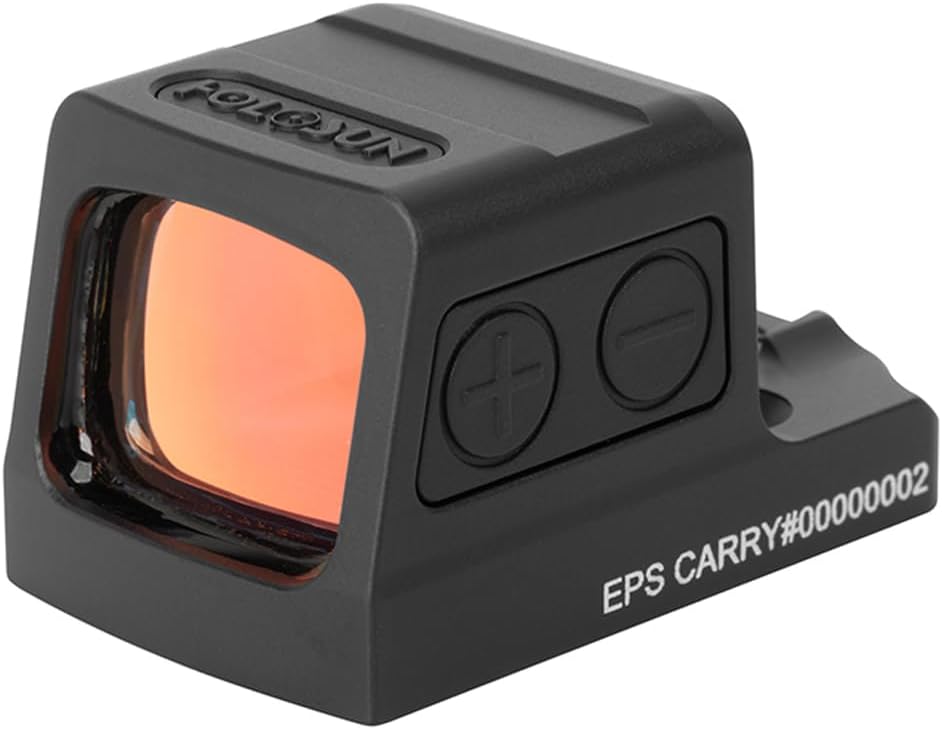
A fully enclosed emitter optic designed for serious concealed carry.
Specs:
- 2 MOA dot or MRS
- Enclosed emitter
- RMSc footprint (with adapter)
- Side battery tray
- IPX8 waterproof
Pros:
- No emitter occlusion from lint or moisture
- Clear glass with minimal tint
- Strong sealing and durability
- Consistent performance in adverse conditions
Cons:
- Slightly bulkier than open emitters
- Higher cost
- Window slightly smaller than expected
My hands-on notes:
This optic solves one of the biggest problems with carry guns: debris blocking the emitter. I intentionally pocket-carried and exposed it to dust—no failures.
Parallax is excellent for a micro optic. Co-witness sits slightly higher depending on mounting plate thickness. The enclosed design slightly increases deck height, which is noticeable but manageable.
Recoil handling is superb—the optic feels “locked in” during rapid fire strings.
What people say online:
Highly regarded as a game-changer for carry optics. Many users upgrade from 407K/507K specifically for the enclosed emitter.
Mounting clarity:
Uses RMSc footprint with included adapter plates depending on slide cut.
╰┈➤ Explore User Feedback and Current Pricing on Amazon
Trijicon RMRcc

A ruggedized micro optic built with Trijicon’s durability pedigree.
Specs:
- 3.25 MOA dot
- Proprietary footprint
- Top-load battery
- Forged aluminum housing
- Waterproof construction
Pros:
- Exceptional durability
- Clear glass with minimal tint
- Proven reliability
- Strong recoil resistance
Cons:
- Proprietary footprint
- Requires adapter plate
- Smaller window than competitors
My hands-on notes:
This optic is built like a tank. On the Shield Plus, it handled recoil with zero shift after thousands of rounds. The top-load battery is a major advantage—no need to re-zero.
Parallax is extremely well-controlled. Co-witness depends heavily on your plate system. The smaller window requires more disciplined presentation, but once mastered, it’s incredibly consistent.
What people say online:
Shooters trust it for duty use. Many cite it as the most durable micro optic available.
Mounting clarity:
Requires adapter plate for Shield Plus—does not use RMSc footprint.
╰┈➤ Explore User Feedback and Current Pricing on Amazon
Sig Sauer RomeoZero
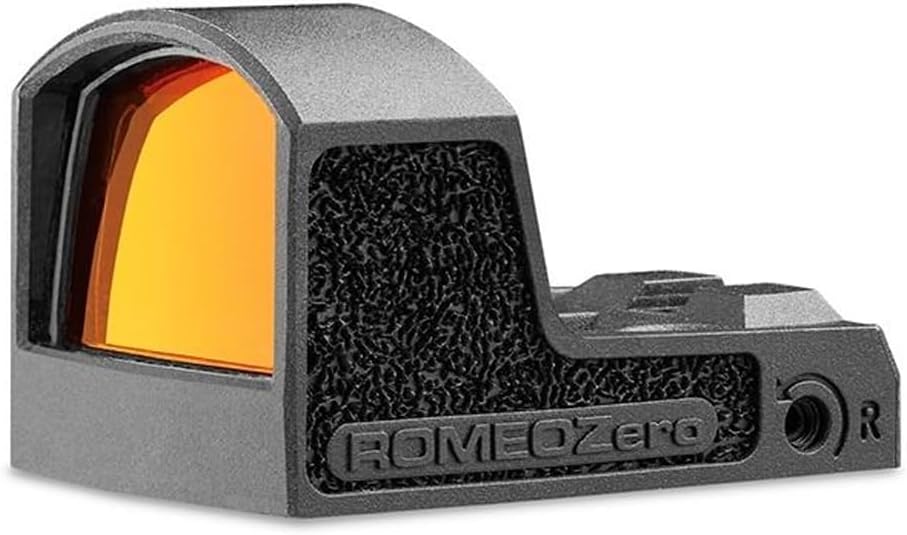
A lightweight, budget-friendly optic designed specifically for micro pistols.
Specs:
- 3 MOA dot
- RMSc footprint
- Polymer housing
- Top-load battery
- MOTAC motion activation
Pros:
- Extremely lightweight
- Affordable
- Easy battery access
- Simple controls
Cons:
- Polymer housing less durable
- Noticeable lens distortion at edges
- Buttons feel soft
My hands-on notes:
The RomeoZero keeps weight to a minimum, which helps maintain the Shield Plus’s balance. However, durability is its tradeoff. The lens shows slight distortion near the edges, and the emitter can be partially occluded if dirty.
Parallax is acceptable at defensive distances. Co-witness is excellent due to its low deck height.
What people say online:
Popular among budget buyers, but many upgrade later due to durability concerns.
Mounting clarity:
Direct RMSc footprint—no plate needed.
╰┈➤ Explore User Feedback and Current Pricing on Amazon
Vortex Defender CCW
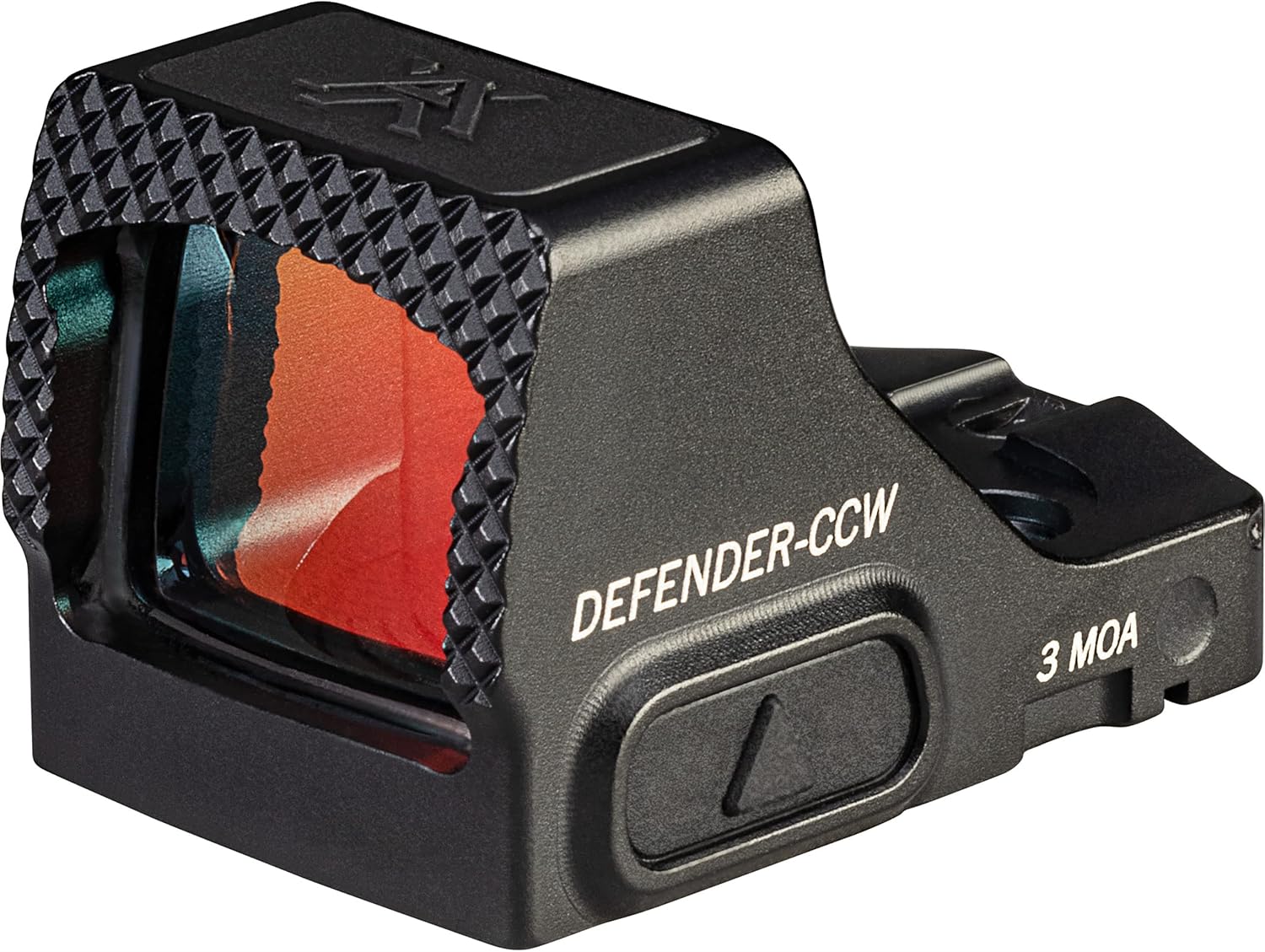
A modern micro optic with improved ergonomics and durability.
Specs:
- 3 MOA or 6 MOA options
- RMSc footprint
- Top-load battery
- ShockShield polymer insert
- Waterproof design
Pros:
- Excellent button tactility
- Clear glass with minimal distortion
- Durable hybrid construction
- Strong warranty support
Cons:
- Slightly thicker housing
- Brightness steps could be finer
- Newer track record
My hands-on notes:
The Defender CCW impressed me with its controls. Even with gloves, the buttons are easy to manipulate. The glass clarity is better than most in this price range.
Parallax performance is solid, and co-witness sits comfortably with standard suppressor-height sights. The recoil impulse of the Shield Plus didn’t cause any flicker or dot dropout.
What people say online:
Growing popularity due to value and Vortex warranty. Many consider it a serious competitor to Holosun.
Mounting clarity:
Direct RMSc footprint—simple installation.
╰┈➤ Explore User Feedback and Current Pricing on Amazon
How I Tested / Evaluation Criteria
Parallax:
I tested each optic at 5, 10, and 25 yards using off-axis sight pictures. Micro dots inherently show some shift, but the best models minimized deviation inside realistic defensive distances.
Co-witness / deck height:
I evaluated how each optic aligned with factory and suppressor-height sights. Lower deck height improves backup sight usability and presentation consistency.
Durability:
Each optic was subjected to repeated recoil cycles, including +P ammunition. I also tested for zero retention and housing integrity.
Battery:
Battery access matters more than people think. Side-load or top-load designs eliminate the need to remove the optic and re-zero.
Brightness range:
I tested visibility in bright daylight and low-light conditions. Overly dim or excessively bright settings reduce usability.
Glass quality:
I examined tint, distortion, and clarity. Poor coatings can introduce color shift and reduce target contrast.
Controls ergonomics:
Button size, placement, and tactile feedback were tested with and without gloves.
Mounting ecosystem:
I evaluated compatibility with RMSc cuts, adapter plates, and ease of installation.
How to Choose the Right Red Dot for This Gun
Choosing an optic for the Shield Plus is very different from selecting one for a full-size pistol. The smaller slide, reduced mass, and concealment role all influence what works best.
First, prioritize footprint compatibility. The Shield Plus optics-ready models are typically cut for RMSc-pattern optics. Choosing a direct-fit optic eliminates the need for plates, which can increase deck height and introduce tolerance stacking.
Second, consider size and weight. A bulky optic disrupts the balance of the pistol and can make concealment uncomfortable. Micro optics like the 407K or EPS Carry maintain the slim profile that makes the Shield Plus effective.
Third, think about emitter type. Open emitters are lighter and more common, but enclosed emitters like the EPS Carry offer superior reliability in real-world carry conditions where lint, sweat, and debris are unavoidable.
Fourth, evaluate reticle type. Larger dots (6 MOA) are faster to acquire, while smaller dots (2–3 MOA) offer better precision. Multi-reticle systems provide flexibility but can clutter the sight picture for new shooters.
Fifth, durability matters more than specs. The Shield Plus has a snappier recoil impulse than larger pistols, so optics must handle repeated shock without losing zero.
Finally, consider battery design and controls. If you have to remove the optic to change the battery, you’ll eventually lose zero. Controls should be easy to use under stress and with gloves.
FAQs
1. Do I need an adapter plate for the Shield Plus?
Most RMSc optics mount directly. Some optics like the RMRcc require adapter plates.
2. What MOA dot size is best for concealed carry?
6 MOA for speed, 2–3 MOA for precision. It depends on your shooting style.
3. Are enclosed emitter optics worth it?
Yes, especially for concealed carry where debris can block open emitters.
4. Will factory sights co-witness?
Usually lower 1/3 co-witness. Suppressor-height sights improve visibility.
5. How often should I change the battery?
Annually is a safe rule, even if the optic is rated for longer.
Conclusion
After extensive testing, the Best Red Dot for M&p Shield Plus 9mm comes down to your priorities: durability, simplicity, or advanced features. For most shooters, the Holosun 407K or EPS Carry offers the best balance of reliability, performance, and ease of use on this platform.
If you want absolute durability, the RMRcc stands out. If you want value and simplicity, the RomeoZero or Defender CCW are strong contenders. The key is choosing an optic that complements the Shield Plus—not one that overwhelms it.